

During paramilitary fighters from the notorious Rapid Support Forces (RSF) overrunning the biggest urban center in western Sudan – carrying out widespread killings, rapes and targeted violence with arms reportedly provided by the UAE – the National Basketball Association's annual in-season tournament commenced on October 31st, proudly sponsored by the identical Gulf state.
A Deepening Partnership Amidst Conflict
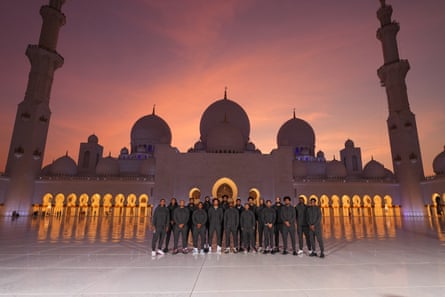
The tournament is the most visible example of the NBA’s growing partnership with the UAE – an alliance that includes yearly exhibition matches in Abu Dhabi, a lucrative agreement with a UAE-based carrier, and plans for a new NBA Global Academy at a university campus in Abu Dhabi.
Larger agreements are expected to follow. Reports indicate the NBA is pursuing Abu Dhabi’s investment in a new NBA-branded European league, which might begin as early as 2027.
This flourishing partnership has proven beneficial for each party: the NBA has secured a deep-pocketed backer, while the UAE has identified a willing partner to help further normalize its autocratic regime, particularly as it faces accusations of fueling atrocities in Sudan.
The UAE's Questionable Record
Underneath its image of opulence and progress, the UAE suppresses dissent with an heavy hand. Critics and human rights advocates languish in prisons on arbitrary charges, penalized for challenging the state. The nation’s wealth is built by migrant laborers, who make up a vast majority of the workforce and who work with limited protections and little recourse against abuse.
The UAE’s role extends into bloodier terrain beyond its borders. A mounting collection of evidence connects the UAE authorities to Sudan’s RSF, the paramilitary faction behind many of the atrocities and war crimes being committed in Sudan.
The Tragedy of The Sudanese Conflict
Sudan’s internal conflict began in April 2023, when hostilities between the Sudanese military and the RSF thrust the country into a state of all out war. Cities such as the capital Khartoum were became battlefields, devastating essential services and creating the world’s largest refugee emergency.
As the civil war entering its third year, casualty figures differ significantly. Humanitarian organizations have recorded thousands of fatalities. Separate studies suggest the number could be far greater, with many more dead due to the violence.
The civil war has also been marked by appalling acts such as rape, abuse, mutilation and targeted persecution. This was further underscored when a key stronghold in Darfur fell to the RSF. The fighters embarked on a campaign of slaughter so severe that images of the violence was visible from satellite imagery.
From the beginning of the conflict, the Emirates have reportedly financed and equipped the RSF, thereby supporting the its war crimes. The military government have even brought a case to the International Court of Justice alleging the UAE of genocidal complicity. In spite of substantial evidence to the contrary, the UAE persistently rejects any role in the war.
Image Laundering and Global Apathy
In recent months, the UAE has staged major sporting events in a sport, basketball, UFC, and motorsport. Upcoming are golf and a padel tournaments. With rare exceptions, sports entities have made little effort to dissociate from the controversial Gulf state.
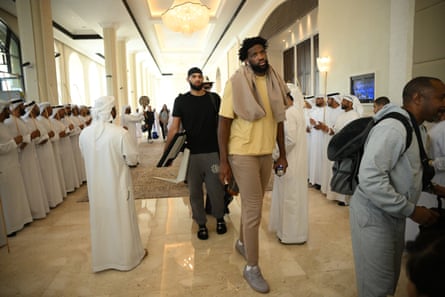
The UAE has reaped enormous benefits from the sports world’s apathy. Investments in football clubs, cricket, and other ventures have recast the ruling family as savvy investors rather than authoritarian rulers.
And yet, the continuing slaughter in Darfur has provoked some rare bad publicity for the UAE. Some football fans have even condemned their club’s owner for the alleged involvement in the Sudan conflict.
An Appeal for Accountability
The silence around the NBA’s recent deal with the UAE is concerning. One of the few to call out the NBA for legitimizing the UAE’s role is an NGO that advocates for the rights of displaced people. They stated: “The tournament could bring out the best in everyone. Instead, it’s being used to sportswash crimes fueled + funded by the UAE in Sudan. The NBA shouldn’t let itself to be a tool in the UAE’s rehabilitation of human suffering.”
However, sports teams and organizations rarely sever profitable agreements without resistance. At a European soccer giant's annual meeting, an activist who once spearheaded a successful campaign to end a similar partnership with a different Gulf state was heckled by members after raising concerns about a fresh deal with the UAE’s airline.
He accused the club of “propping up the reputation of sketchy political regimes” and cautioned that the deal could inflict “lasting damage to the standing of our club”. For his comments, he was openly mocked by the organization's leadership.
This event highlights how effective the UAE's brand management strategies have been, making dissent seem unwelcome even within renowned sports institutions.
A Concluding Reflection
One should not expect the NBA, which also maintains ties with other controversial regimes, to publicly address the UAE’s conduct … but imagine if they did. Imagine if genocide, war crimes and systemic repression were red lines for international athletic organizations.


