


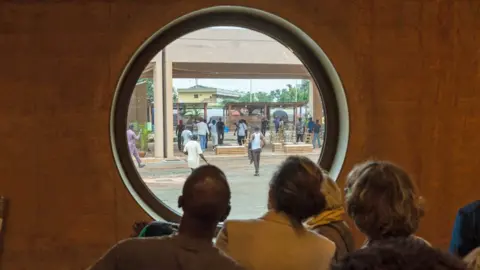
Nigeria's impressive new Museum of West African Art (Mowaa) has landed in the crosshairs of local power politics during the period it was supposed to – but failed – to open its doors to the general public for the initial occasion.
The Grand Vision
The large-scale facility is located in the core of Benin City, main city of the southern state of Edo – and contains an historical dig and structures designed by high-profile British-Ghanaian architect Sir David Adjaye, particularly noted for the Washington African American Museum that began operations in Washington DC in 2016.
It has been five years in the development – and is designed to showcase both the heritage and the present of cultural innovation in the locale famous for the cultural artifacts, cultural objects looted from the king's palace by British soldiers in the 19th Century.
Preparation and Promise
It is remarkable – and before the anticipated opening, Mowaa was buzzing with employees committed to demonstrate it is a place that can rival established cultural centers in the West.
Within preservation experts precisely revealed art pieces from protective packaging, checking each artifact and taking thorough documentation before placing them on exhibition areas and stands.
Specialists fine-tuned temperature regulation systems. In the materials science laboratory, officers calibrated instruments meant to maintain centuries-old artefacts.
Funding and Economic Goals
The venture has been the idea of investor Phillip Ihenacho – presently Mowaa's managing director.
"I aim us to have a significant economic benefit on communities in this region," he told media outlets, adding that he hoped to make this urban center "an arts hub."
Mowaa, a not-for-profit local organization, envisions itself establishing in excess of 30,000 employment opportunities and contributing above $80m annually to the regional creative economy through partnerships and programming.
Financial Support and Government Issues
It has required $25m to get here – capital raised from various contributors, including the international partners, the British Museum and the local administration.
But currently the state authorities has pulled the rug from beneath it – canceling the occupancy of the property on which the building was erected.
An government communicator explained this was because in the initial documents it had identified as the Edo-named institution – and it had subsequently eliminated "the state identifier" from its title.
Unrest and Official Response
This announcement came after protests on the weekend, when activists invaded the campus demanding it be called the Benin Royal Museum.
A boisterous crowd harassed foreign guests at the museum before the opening – requiring them to be hurried away under police escort.
President Bola Tinubu has also intervened to work to address the dispute, creating a high-level committee to manage the situation.
Political Complexities
But why has this evolved into so controversial – and such a reputation problem?
The majority of it stems from local power struggles at a area administrative level, as it was the ex-administrator Godwin Obaseki – whose governance concluded last year – who was a primary advocate of the museum.
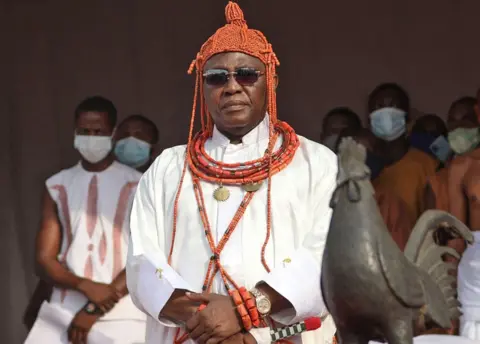
And it appears the leadership of the new governor, a close ally of the regional monarch, called the royal figure, may want greater involvement in the initiative. The protesters on Sunday, for case, were demanding that the museum be positioned under the supervision of the royal leader.
The Historical Objects Discussion
This emphasizes the contentious issue of the cultural artifacts, one of Africa's most renowned artistic heritage.
Because though the museum does ultimately open, these objects will be noticeably missing.
They are brass, elephant tusk and wooden sculptures that once embellished the monarch's home of the historical empire before UK forces looted them in the colonial era during a punitive expedition.
Nowadays, thousands remain scattered across institutions in the West -- featuring the London museum, Berlin's Humboldt Forum and the Metropolitan Museum of Art.
Return Initiatives
Their repatriation has become one of the most contested conversations in the global art world. Approximately 150 have currently been returned – and more are scheduled to be repatriated.
When plans for the museum in Benin City were first announced in the pre-pandemic era, the key players on the national arts community anticipated it would become their natural home – a modern campus to show them off to the world.
But the waters were muddied two years ago after the federal government declared that the Oba would be the legal custodian of repatriated artifacts – and the palace advocated for a facility under the royal family's direct control, opposing the preferences of Obaseki.
Diplomatic Challenges
This placed Mowaa in a delicate position: expressing a definite position on repatriation while staying tactful on custodianship – and emphasising its broader vision, which led to|c


